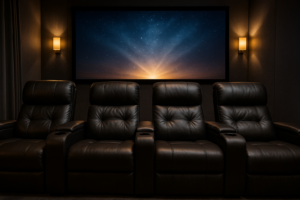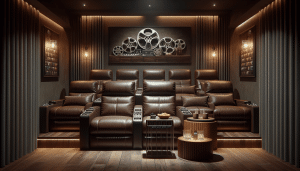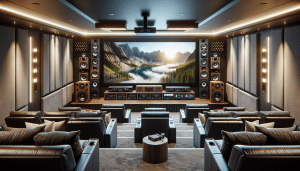
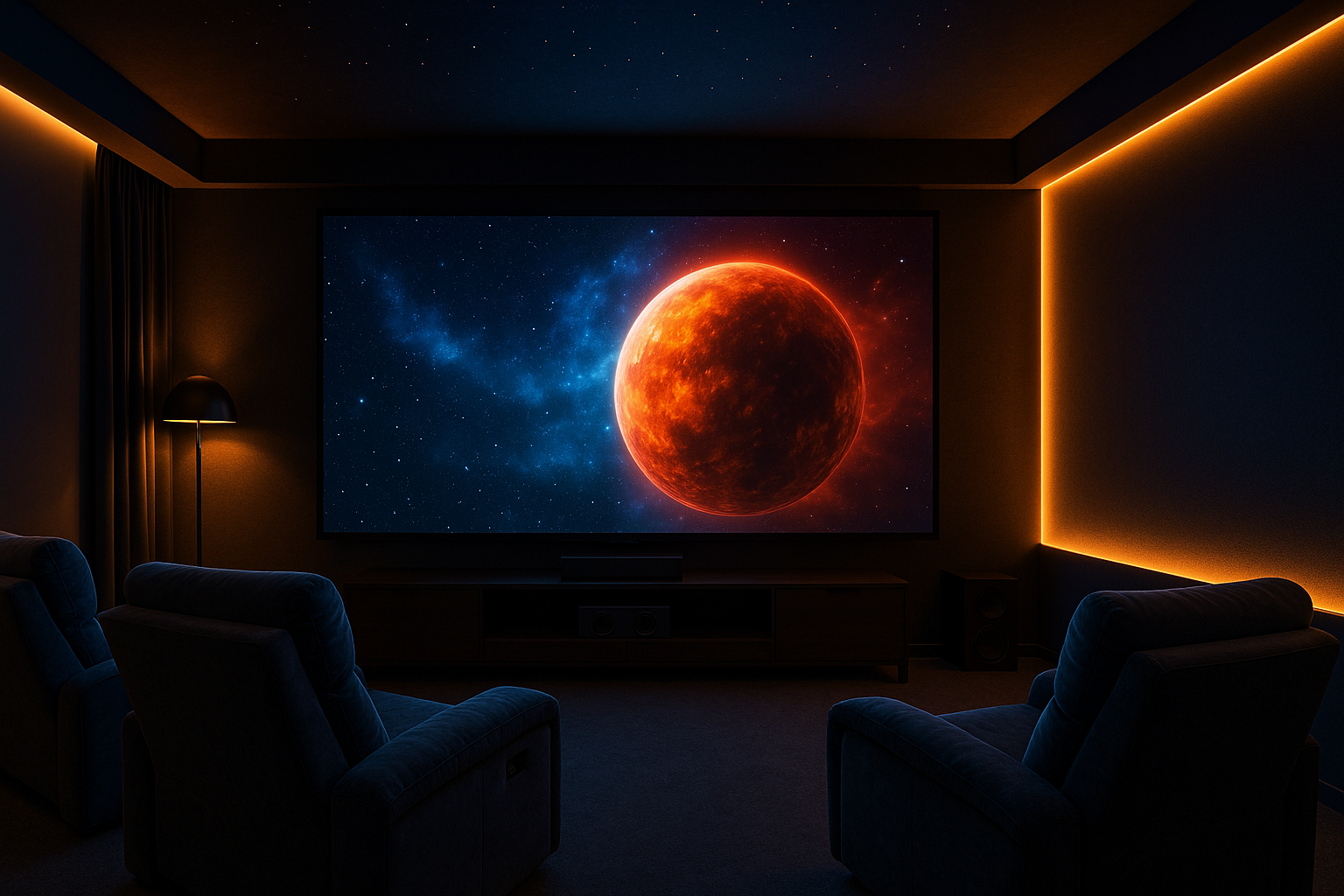
Imagine pressing play and the room just knows what to do—the ceiling glows softly, aisle lights trace a path to your seat, and your Screen seems to float like it’s in a real cinema. That’s the magic of thoughtful, well-tuned Lighting. And honestly, it’s the piece most homeowners don’t plan for until glare hits a screen or the remote feels like a headlamp in a cave. If you’re building or upgrading a theater in Salt Lake City, this guide from AZP Home Theaters & Automation will help you set the perfect mood, avoid common snags, and enjoy your space day one. You know what? Lighting might be the unsung hero you remember most.
Why lighting makes or breaks your home theater
You want a dark room. Well, not exactly. Total darkness can look amazing on paper, but in real life you still need safe steps, a place to set your popcorn, and enough glow to pause the movie without waking everyone with a blinding overhead. The sweet spot is layered light with precise control. That’s how you get that cinema feel—rich contrast, deep blacks, zero glare—without tripping on the ottoman.
Let me explain. A theater asks your eyes to focus on a bright rectangle in a darker space. If the walls, ceiling, or fixtures splash light toward that screen, you’ll wash out the image. If the room is pitch black, your eyes fatigue. So, we build layers that support the picture, your comfort, and the vibe you want. That’s the art and science behind great home theater lighting.
Start with layers: ambient, task, accent, and safety
Ambient: the soft base
Ambient light sets a low, even glow. Think dimmable cove lighting or discreet recessed cans with tight beams. In theaters, we keep ambient low and indirect so it never hits the screen. Warm color tones help—more on that in a minute.
Task: where your hands go
Task lighting helps you find remotes, drinks, or the right Blu-ray. Small puck lights inside built-ins, a subtle table lamp with a shade, or under-shelf strips do the trick. Keep these on a separate zone so you can nudge them down to a whisper when the movie starts.
Accent: make it feel special
Accent lights bring the drama. Linear LED behind Acoustic panels, backlit movie art, or a fiber optic “star” ceiling turns a nice room into a “whoa” room. Used well, accent lighting draws the eye away from walls and toward the experience.
Safety: stairs and aisles
Low-level step lights or LED tread strips keep people moving safely without blasting light across the screen. This layer is non-negotiable if you have risers. We dim these very low so they do their job and then disappear.
Color temperature and dimming: warmth, shadow, and control
Here’s the thing: the color of your light changes how your brain reads the room. Cool light (5000K) feels bright and clinical. Warm light (2700–3000K) feels cozy and, importantly, hides reflectivity and glare better. For most Salt Lake City home theater projects, we set core fixtures at 2700K and use a “tunable white” layer for pre-show and intermission.
The second part is dimming. We’re not talking simple on/off. Good dimming is smooth, flicker-free, and repeatable. If your LEDs shimmer on camera during your kid’s Mario Kart highlight reel, that’s a dimmer-driver mismatch. We match drivers and controls on day one so your scenes fade like velvet, not like a power outage.
Bias lighting: a tiny glow with big picture payoff
A little strip of bias lighting behind a TV or projection screen reduces eye strain and boosts the perception of contrast. It’s simple: the soft halo raises the room’s black level just enough so your pupils don’t fight the bright screen. Result? Richer blacks and more comfortable long sessions. We place neutral, high-CRI LEDs at about 10 percent of screen brightness and aim for D65-ish tone when accuracy matters. Sounds fussy, but you’ll feel the difference right away.
Fixtures that play nice in theaters
– Recessed downlights with tight beams: Trimless, black baffles reduce reflections. Aim them away from the screen and seating sightlines.
– Linear LED in coves or behind panels: Even, indirect glow; amazing for ambience and “coming attractions” mode.
– Wall sconces with shades: Classic cinema look. Choose shielded designs that cast light up or down, not out toward the screen.
– Step and aisle lights: Low output, narrow spread. We install them low and dimmed to a whisper.
A quick word on budgets: we specify high-CRI (90+) LEDs, because color fidelity matters in a theater. Faces look natural, wood tones read true, and movie art has depth. Cheaper lamps can look greenish or dull at low dim levels.
Smart control and simple scenes (yes, it can be both)
Control is where everything clicks. Because we’re in Salt Lake City, it’s fun to point out: Control4—one of the big names in home control—started here. We work with Lutron RadioRA 3, Control4, and Ketra for tunable white and color when needed. Your phone, a remote, voice, or a sleek keypad can call up scenes like these:
– Movie Night: Ambient 5 percent, steps 10 percent, bias on, sconces off.
– Intermission: Ambient 20 percent, sconces 15 percent, steps 25 percent.
– Game Day: Slightly brighter task lighting so snacks keep coming.
– Clean Up: Everything to 80 percent so you actually see the popcorn trail.
One tap. No fumbling mid-credits.
Room size, basements, and Utah quirks
Salt Lake homes love a good basement theater. Concrete walls and low ceilings help with sound, but they need careful light placement. We avoid glare by keeping fixtures behind the seating line, using indirect light up high, and treating shiny surfaces. If you’re in an older Sugar House bungalow, we’ll look at shallow housings and low-voltage options. In Daybreak or Herriman new builds, we can frame for coves and cable paths before drywall and keep wiring beautifully hidden.
Seasonal note: Utah winters bring early sunsets—cozy vibe gold. Summers mean bright evenings, so we add blackout shades tied to your scenes. Press “Movie Night,” shades drop, the Projector warms up, and the room shifts from sunny to cinematic without a scramble.
Noise, glare, and paint: little things that matter more than you think
Your dimmer might hum. Your can lights might reflect on the screen. Your ceiling paint might bounce light like a mirror. These are tiny details, but they stack up. We spec silent dimmers, anti-glare trims, and darker neutral paints (think 10–20 percent reflectance) on the ceiling and front wall. Even a simple step like a matte finish can make your projector look a notch sharper.
And while we’re here: vent light leaks are real. We baffle supply and return vents so air flows, but light doesn’t spill onto the screen area. It’s the kind of fix you don’t see—because you shouldn’t.
Good, better, best: simple ways to plan your upgrade
A thoughtful plan doesn’t need to be pricey to feel amazing. Here’s a quick starter map we use often.
| Layer | Good | Premium |
|---|---|---|
| Ambient | Dimmable warm LEDs with quiet wall dimmer | Cove lighting with high-CRI strips and scene control |
| Accent | Two sconces with shades | Backlit panels or star ceiling with smooth fades |
| Task/Bias | Basic bias strip behind TV and a table lamp | Tunable-white bias and under-shelf task zones |
| Control | Multi-scene keypad | Control4/Lutron scenes, voice, and app control |
If you’re building in phases, start with bias lighting and step lights, then add cove lighting and scenes. The wow factor rises fast, and your screen will thank you.
New build vs. retrofit in Salt Lake City
New construction makes it easy to run low-voltage lines, frame coves, and place power where you want it. We coordinate with your builder so the dimming hardware and drivers live in quiet, accessible spots—no buzz, no clutter. For retrofits, we use ultra-thin fixtures, wireless keypads, and existing power lines to keep walls intact. Many Utah basements already have soffits; those are perfect homes for indirect LEDs without major framing.
A small but important note: we label every zone and program every scene to match the keypad engravings. Sounds obvious, but it’s a lifesaver when the lights fade and the trailer starts.
Common mistakes to avoid (and how we fix them)
– Downlights too close to the screen: Causes glare. We relocate or cap and add indirect light instead.
– Mixed color temps: Looks messy. We standardize to 2700K, then add tunable zones where it helps.
– Cheap dimmers with LED strips: Leads to flicker. We pair the right driver with the right dimmer—no guessing.
– No safety layer: Trip hazard. We install step lighting on its own zone that remembers its level.
– White ceiling up front: Light bounce. We switch to a darker matte tone. Big gain, small spend.
We see these all the time, and correcting them changes how your room feels within minutes.
What about sound? Lights and audio are teammates
Light leaks and fixture noise can creep into your soundtrack. We use quiet drivers, isolate transformers where needed, and choose fixtures that don’t rattle. Also, accent lights can highlight acoustic panels. That’s form hugging function, and it looks sharp. When lighting and sound are planned together, the room feels intentional—calm even when the movie is chaos.
Local flavor: a theater that fits Salt Lake life
Utah’s famous for crystal-clear night skies. Even indoors, we respect that clarity: low-reflection finishes, clean wiring, and scenes that feel like your favorite seats at the Megaplex—minus the sticky floor. Hosting Jazz playoffs? We build a “Game Day” scene that sets brighter task lights so the charcuterie survives halftime. Snow day matinee with the kids? One button sets a cozy glow and drops the shades. It’s your house; it should act like it knows you.
Ready to set the mood? Let’s make it easy
You don’t need a lighting PhD to get a beautiful, comfortable theater. You need a plan, the right parts, and clean programming. That’s our lane. At AZP Home Theaters & Automation, we design, install, and fine-tune home theater lighting that looks great on day one and keeps working quietly behind the scenes. We’ll help you choose fixtures, set scenes, and make sure your screen shines—no glare, no guesswork.
Call us at 385-475-3549 or tap Request a Free Quote. One visit, a clear plan, and a room that finally feels like a theater.