Picture your living room on a snowy January night. The Wasatch peaks fade, your lights ease down, and the opening notes of your favorite movie roll in with room-filling clarity. That’s the feeling a well-built system brings home. This guide walks you through how home entertainment system installation really works—what to consider first, what to skip, and how to get it right the first time. And if you’re near Salt Lake City, you’ve got a crew that lives and breathes this stuff: AZP Home Theaters & Automation.
Who this guide is for (and how it helps)
Maybe you’re finishing a basement in Sugar House, rehabbing a mid-century bungalow in Millcreek, or setting up a family media room in Daybreak. This is for Salt Lake homeowners who want clean wiring, smooth control, and wow-worthy picture and sound that don’t fight your space. We’ll keep the tech talk friendly. We’ll sprinkle in some pro tips. And we’ll tell you where a pro shines so you can save time, money, and a few headaches.
Start with the room—because the room always wins
Light, sound, and space
Rooms shape systems. Bright south-facing windows in Holladay? You need a TV or a high-brightness Projector with proper light control. A quiet, windowless basement in Bountiful? You can go big with a projection Screen and black velvet trim for that “cinema” vibe.
Acoustics matter more than most folks expect. Hard tile, big glass, and bare walls bounce sound around. Add a rug, some soft furnishings, and a few well-placed Acoustic panels, and your speakers suddenly sound expensive. You know what? That simple change can beat doubling your speaker budget.
Quick-sizing cheat sheet
| Room Size | Screen/TV Size | Speaker Layout |
|---|---|---|
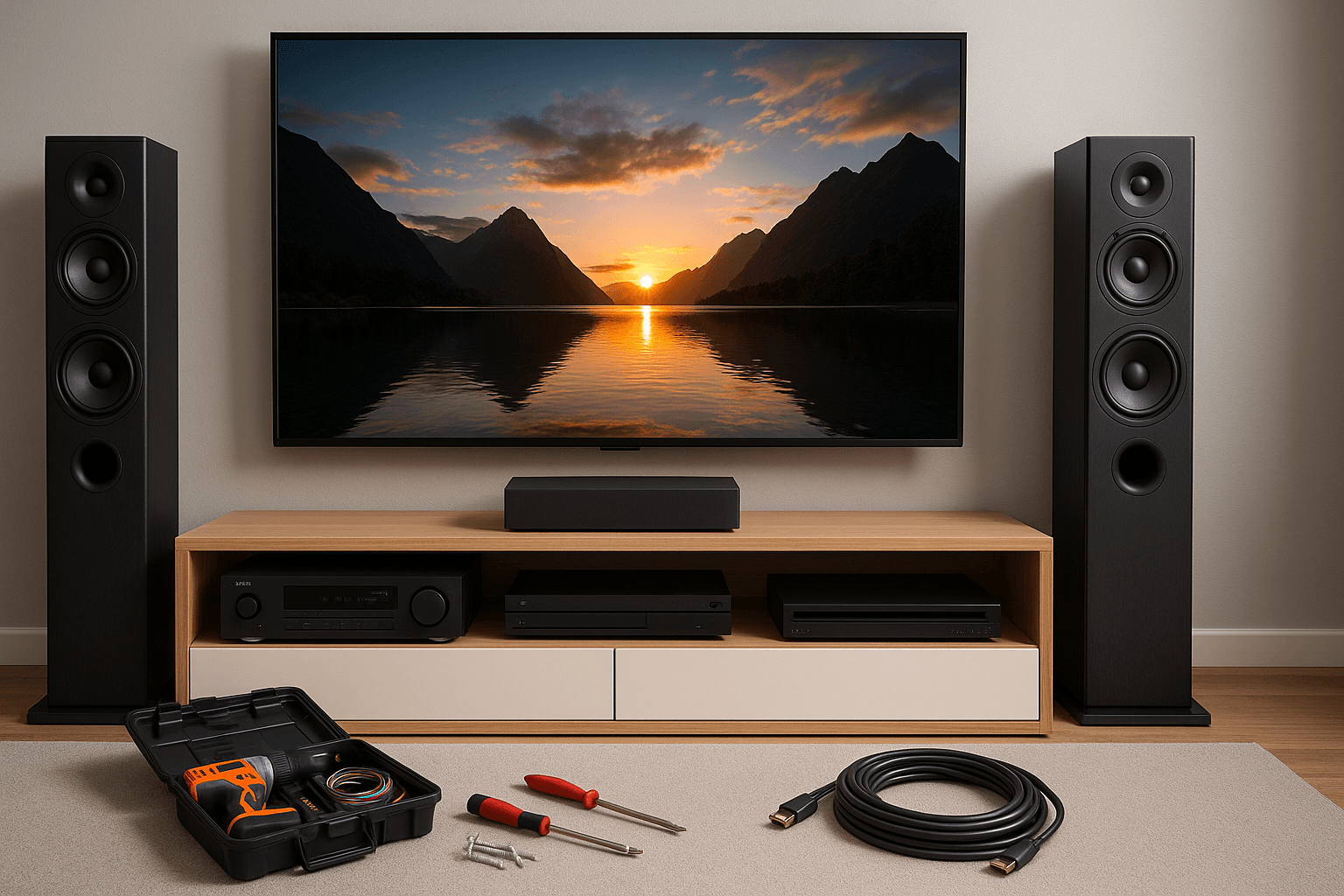
| Small den (10×12 ft) | 65–77 in TV | 5.1 or 5.1.2 Dolby Atmos |
| Basement media room (12×18 ft) | 100–120 in screen + projector, or 83–98 in TV | 5.1.2 to 7.1.4 Dolby Atmos |
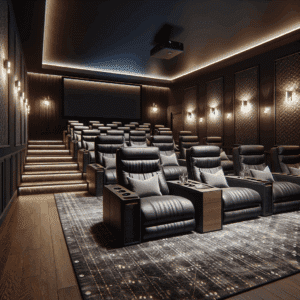
| Dedicated theater (14×20 ft+) | 120–140 in screen | 7.1.4 to 9.1.6 (with pro design) |
One more local note: the high-altitude, dry climate can affect projector cooling. Leave breathing room in cabinetry and plan for quiet ventilation near your AV rack.
Projector or TV? Here’s the thing
Both look incredible now, but they suit different rooms and habits.
Big TVs like the LG OLED or Samsung QLED deliver eye-popping HDR, great brightness for daytime sports, and simple daily use. If you watch Jazz games with the blinds open or do casual gaming, a large TV is a slam dunk.
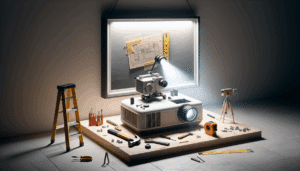
Projectors such as Sony and Epson bring cinematic size for movies and prestige TV nights. Brightness has improved a lot, yet ambient light still reduces contrast. Pair a projector with blackout shades and an ALR screen in lighter rooms, or embrace a darker basement and go all-in. Either way, ISF video calibration can make any screen sing.
Sound that makes you feel it
Sound paints the scene. Good speakers reveal detail. Great placement makes detail feel alive.
Start with a center channel that matches your left and right speakers—dialog should feel locked to the screen. Add a capable subwoofer (SVS, KEF, or Triad) for depth you can feel, not just hear. For Dolby Atmos, ceiling speakers or angled modules create height effects—rain overhead, jets above, applause all around. Fun, right?
Typical layouts: 5.1.2 for smaller rooms, 7.1.4 when you have the space and budget. Keep front speakers at ear level, angle them to the main seats, and set heights above ear level for better overhead imaging.
Driving it all, use an AV receiver or separates from Denon, Marantz, or Anthem. Room correction like Dirac Live or Anthem Room Correction dials in bass and smooths peaks. It’s half science, half art—and that last 10 percent of tuning is why people call us back smiling.
A clean system starts with cables you can’t see and a network that never flinches.
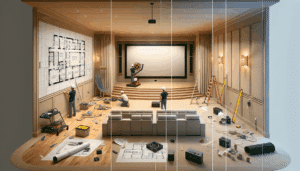
For new builds, we prewire with in-wall rated speaker wire, conduit for future upgrades, and runs for subwoofers on each side of the room. For retrofits in older SLC homes, we snake cables through crawl spaces and joists and leave neat wall plates. No spaghetti, no guesswork.
Power matters. Use a surge protector and a solid power conditioner. Networking matters even more. Hardwire your Apple TV 4K, Roku Ultra, and gaming consoles. A stable router and access points from brands like Ubiquiti keep 4K streams smooth when the whole house hops on Wi‑Fi.
Control that just works (and doesn’t confuse guests)
The fewer remotes, the better. With Control4—which has deep roots right here in Utah—you tap one button and everything falls into place: TV on, inputs set, lights fade, shades drop. It’s smooth, family-friendly, and easy for guests. Voice control pairs well, but physical buttons still win during a late-night movie when whispers matter.
Add smart Home Automation for Lighting scenes, motorized shades from Lutron or Hunter Douglas, and thermostat tweaks. Movie Night can mean 30 percent lights, closed shades, and warm audio—all in one tap.
Sources, sports, and game night
Most homes run a mix: Apple TV 4K for streaming, a UHD Blu‑ray player for reference-level movies, and a console (PS5 or Xbox) for gaming. A dedicated movie server like Kaleidescape is a splurge, but cinephiles love the quality and lightning-fast navigation.
Sports fans in Salt Lake want motion clarity and low latency. A bright TV in the main room and a projector in the theater is a popular combo. Sunday football upstairs, Oscar night downstairs. Life’s about choices, right?
Calibration and finishing touches
Once gear is set, tuning makes it sing. ISF calibration for video sets color and contrast correctly. Audio calibration aligns speaker levels, distances, and crossover points; then we fine tune by ear. Small trim changes can turn “good” into “goosebumps.”
Don’t forget comfort. Sightlines matter. We align screen height so your neck rests easy. In a two-row room, a modest riser and staggered seating help. Add a plush throw for winter marathon binges—Salt Lake winters practically beg for a trilogy.
Common mistakes we fix all the time
- Big screen hung too high: Eye strain and a sore neck. Center it near seated eye level.
- All gear on Wi‑Fi: Wired is steadier for 4K and Atmos. Save Wi‑Fi for phones and tablets.
- Too little subwoofer: One small sub in a large room vanishes. Right-size it—or add a second for smoother bass.
- Ceiling speakers misplaced: Height channels should frame the seats, not hug walls.
- Light bouncing off the screen: Matte paint near the screen edge and dark fabric go a long way.
Budget ranges and smart planning
Every home and family is different, but here’s a simple roadmap we see around the Valley:
- Starter media room: Large TV, 5.1 or 5.1.2 audio, clean rack, basic control.
- Balanced theater: 100–120 in projection, 7.1.4 Atmos, acoustic treatment, programmed control.
- Flagship cinema: 120–140 in scope screen, premium speakers, dual subs, advanced room treatment, custom lighting and shading.
We like step-by-step builds. Prewire during construction. Add core gear. Expand with better speakers, more subs, or shades when you’re ready. It keeps budgets friendly and upgrades painless.
Why AZP Home Theaters & Automation?
We’re local. We know bright mountain light, quiet basements, and how older brick homes hide wiring paths. We plan, install, and calibrate systems that fit your space—and your habits. Honestly, we’re picky about clean racks, labeled cables, and control that your family actually uses without a cheat sheet. And if you want a long movie marathon during a snowstorm, we’ll make sure your network doesn’t blink.
We work with Control4, Sony, LG, Samsung, Denon, Marantz, Anthem, Triad, KEF, SVS, Lutron, and more—because matching the right gear to the right room is the secret sauce.
Ready to bring it home?
If you’re in Salt Lake City or nearby, let’s plan your Home Theater Installation the smart way. Tell us what you watch, where you sit, and how you live—then we’ll handle the rest, neatly and professionally.
Call 385-475-3549 or Request a Free Quote from AZP Home Theaters & Automation. A better movie night, a cleaner setup, and a happier family movie ritual are closer than you think.