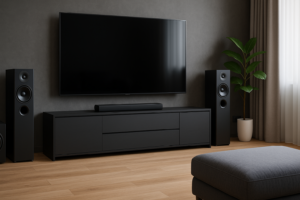
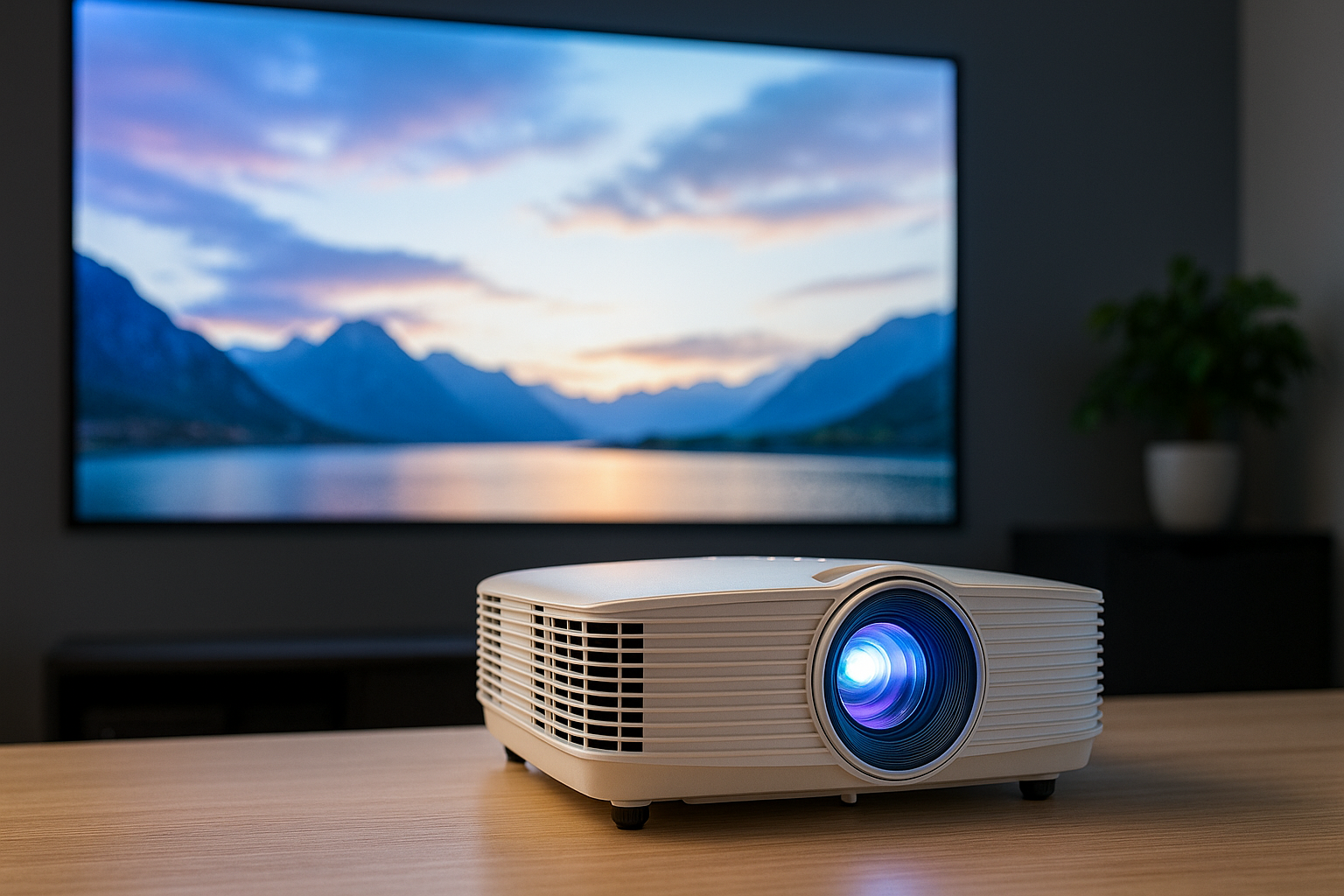
Picture this: movie night at home, lights low, popcorn warm, and a giant, crisp image that makes you forget you’re on your own couch. That’s the promise of a well-done High-Definition Projector Setup. If you’re a homeowner around Salt Lake City, you’ve probably wondered what it takes to get that theater feel without the weird remote codes or tangled wires. Here’s the thing—getting it right isn’t hard, but it does call for a smart plan, the right gear, and a few insider tricks. That’s where AZP Home Theaters & Automation steps in. We design, install, and fine-tune home projector systems that look amazing and work every time you hit Play.
So, what does “high-definition” really mean now?
We used to mean 1080p when we said HD. Now, most folks aim for 4K. And it’s not just about pixel count. It’s about clarity, color, and contrast that feel true-to-life. The big pieces are resolution, dynamic range, and color accuracy.
Here’s a quick lay-of-the-land:
– 1080p vs. 4K. 1080p still looks great on medium screens. 4K shines on bigger screens and gives you a cleaner, more textured image.
– HDR (High Dynamic Range). This widens the range between dark shadows and bright highlights. Dark scenes feel richer; skies look more nuanced, not blown out.
– Color accuracy. Look for models with good color management and a cinema mode that isn’t all neon-blue.
– Contrast ratio. Real-world contrast matters more than marketing numbers. In darker rooms, better contrast makes a bigger difference than raw brightness.
You don’t need a 4K projector. And yet, you’ll probably want one. Most streaming services, 4K Blu-rays, and even big games push higher resolution and HDR. If you’re planning a Screen 110 inches or larger, 4K pays off in a big way.
The right projector for your room
Projectors aren’t one-size-fits-all. The room guides the gear. In the Avenues with lots of sunlight? You’ll need more brightness and a special screen. In a Draper basement? You can chase deeper blacks and cinema-grade color.
Throw distance, placement, and lens features
– Throw distance is how far the projector sits from the screen. Short-throw units sit close to the wall. Standard-throw sits farther back. Use the manufacturer’s calculator or call us—we’ll map it to your room.
– Lens shift and zoom help center and size the image without warping it. They’re better than relying on digital keystone.
– Noise and cooling matter. Some projectors hum. In a quiet room, that’s all you’ll hear. We look at fan noise and ventilation before we drill a single hole.
Light source: lamp vs. laser vs. LED
| Type | Why People Choose It | Best Fit |
|---|---|---|
| Lamp | Lower cost; solid brightness | Dedicated rooms, budget-minded builds |
| Laser | Long life, fast on/off, stable color | Frequent use, mixed-light rooms |
| LED | Very efficient; often portable | Small spaces, casual viewing |
And one more piece of nerd candy: DLP is sharp and great for gaming; LCD is bright and budget-friendly; LCoS (like Sony SXRD or JVC D-ILA) nails film-like contrast in dark rooms. We install all three depending on your goals.
Brightness, screens, and why your paint color matters
The Wasatch Front gets bright—those sunny afternoons bounce light off every surface. That’s great for the mood, less great for a projector. Bright rooms need more lumens and the right screen.
– Lumens. For light-controlled rooms, 1,500–2,200 lumens is often enough. For living rooms with windows, think 2,500–3,500 lumens.
– ALR screens (Ambient Light Rejecting) help a ton in bright spaces. They reflect light from the projector but resist room light.
– Screen gain controls how much light bounces back. Higher gain can help in bright rooms, but it narrows the sweet spot. We’ll match gain to seating.
You know what? Even the wall color counts. Neutral, matte paint helps prevent glare. Glossy or bright walls splash light back onto the screen and wash out blacks.
Screen size and seating distance
A simple rule: take your seating distance and divide by 1.2 for a cinema-style screen size. If your couch is 10 feet back, a 100-inch screen feels right. Gamers and sports fans sometimes go bigger for that You-Are-There energy.
Aspect ratio
– 16:9 is perfect for TV, sports, most streaming.
– 2.35:1 or 2.40:1 (CinemaScope) feels like a movie theater. You’ll get black bars on TV but full-bleed movies.
We can set up a masking system so both look clean.
Placement and wiring: little details, big payoff
Ceiling mount or shelf mount? Either works when planned well. Ceiling keeps cables tidy and the image centered. Shelf mounting can be simpler but needs precise height.
– Don’t rely on digital keystone. It fixes crooked geometry, but it throws away pixels. Use lens shift when possible.
– Run the right cable. For 4K HDR at longer distances, active or fiber HDMI keeps the signal healthy. For gaming, make sure it’s HDMI 2.1 capable for higher refresh rates.
– Plan power and control. We add an outlet in the ceiling and hide the cabling in the wall. Clean, safe, no trip hazards.
– Ventilation. Projectors run warm. We leave room for airflow and consider Utah’s dry air and dust. Filters matter.
Here’s the part folks forget: network. A hardwired connection to your streamer is smoother than Wi‑Fi, especially during Jazz games when everyone’s watching at once.
Sound that matches the picture
A giant screen with tiny sound feels off. Pair your projector with audio that fills the room. It doesn’t have to be complicated.
– Soundbar plus sub for a minimalist setup in family rooms.
– 5.1 or 7.1 surround for dedicated theaters. In-ceiling speakers can keep the space clean.
– AVR with eARC keeps audio and video in sync. We label inputs and set delays so voices match lips.
In many Utah basements, sound drifts upstairs through open joists. We can add discreet Acoustic panels or insulation to soften the bleed without making your theater feel dead.
Streaming, gaming, and smart control
We install Apple TV 4K, Roku Ultra, NVIDIA Shield, and 4K Blu-ray players all the time. Each has perks. For gamers, input lag matters; some projectors have a “Game” mode that keeps action snappy.
– Apple TV 4K for smooth streaming and Dolby Vision on compatible gear.
– Shield TV for power users and Plex fans.
– 4K Blu-ray when you want the absolute best image and sound.
Want one remote that just works? We integrate with Control4 and other systems so a single button dims the lights, lowers the screen, switches inputs, and starts the movie. No guessing, no drama—just movie time.
Calibration: fast fixes and pro polish
Out of the box, many projectors run too blue and too bright. They’re tuned to catch your eye on a showroom floor. Home is different.
Quick wins you can do today:
– Use Cinema/Film mode. Avoid Vivid.
– Set color temp to Warm. Skin tones look natural.
– Turn off motion smoothing unless you watch a lot of sports.
– Match brightness to the room. A “Day” preset and a “Night” preset helps.
For the perfectionists, we provide ISF-style calibration. We adjust grayscale, gamma, and color points with meters, not guesses. The result is a more natural image with detail in shadows and highlights—especially noticeable in those moody mountain-night scenes.
Common gotchas we fix around Salt Lake City
– Too small a screen. If you’re squinting during Utes games, you went too small. We’ll re-size to match your seating.
– White glossy walls. They bounce light right back at the screen. We suggest softer, matte tones.
– Cheap long HDMI runs. They work—until they don’t. Fiber or certified active cables prevent dropouts.
– No window control. Afternoon sun over the valley is bright. Simple blackout shades change everything.
– Ignoring HVAC vents. A ceiling register pointed at a projector can heat it up and raise fan noise. We redirect airflow or shift placement.
Honestly, some of this is easy to miss if you don’t do theaters every week. We do.
Budget and timeline: what to expect
Every project is different, but a clear range helps. Roughly speaking:
– Projector: Quality 4K models start around the mid-$1,000s and go up with better contrast, laser light, and lens features.
– Screen: Fixed-frame from a few hundred; ALR and acoustically transparent screens cost more but solve real problems.
– Mounts, cabling, power: Varies with distance and the room’s layout.
– Labor and calibration: We keep it clean and code-safe, and we finish with a user-friendly walkthrough.
Install time can be a day or two for most setups. If we’re adding speakers, acoustic treatment, or smart control, we’ll map a simple schedule so you’re never guessing.
Why AZP Home Theaters & Automation is a smart call
We’re local. We know the way afternoon light hits a room in Holladay, how winter static and dust can affect equipment, and how altitude impacts cooling. We also care about how it feels when you press Play. That means no flicker, no weird volume jumps, and a remote your whole family understands.
We bring together Home Theater Installation in Salt Lake City with thoughtful Home Automation. We measure your room, run neat wiring, label everything, and stay after to set your streaming apps and presets. You just enjoy movie night, game day, or a Sundance favorite without fiddling.
If you’re ready for a screen that makes you grin every time the lights dim, we’re here to help. Call 385-475-3549 or tap Request a Free Quote. We’ll design a setup that fits your space, your budget, and the way you actually watch. And yes, we’ll make the popcorn scene look perfect.