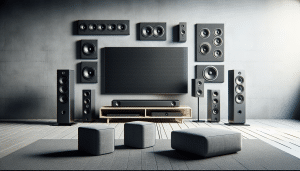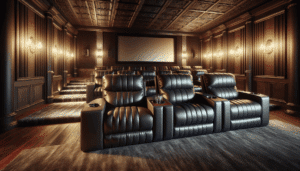
There’s a special kind of joy when your favorite song fills the house and it just sounds right—clear vocals in the kitchen, smooth bass in the living room, the whole place humming. If you’re a homeowner in Salt Lake City, you’ve probably imagined that scene during a Jazz game night or while prepping for a neighborhood barbecue. This guide shows you how to install a home audio system like a pro—no guesswork, no clutter—so your space looks clean and sounds incredible, winter or summer.
Start With a Plan, Not Guesswork
Let me explain. Great sound starts on paper. Before you buy anything, answer a few quick questions.
- What’s the goal? Background music for the whole house, a dedicated home theater, or both?
- How many zones? Kitchen, patio, owner’s suite, basement rec room—make a list.
- Wired, wireless, or hybrid? Retrofits can be easy with wireless amps; new builds love clean wiring.
- Control style? Phone app, wall keypads, voice control, or a simple remote.
- Future plans? Think about adding a sub later, outdoor speakers, or a game room.
Here’s a quick, plain-language comparison that helps homeowners choose the right backbone for their system.
| Option | Pros | Considerations |
|---|---|---|
| Wired | Stable, great sound, hidden cables, great for multi-room audio | Best during remodels/new builds; more planning and patching |
| Wireless (Sonos, Bluesound) | Fast setup, flexible placement, tidy apps | Relies on Wi‑Fi; needs solid network for high-res streams |
| Hybrid | Mix of stability and flexibility, easy upgrades | Requires careful device planning and naming |
Honestly, most Salt Lake homeowners end up choosing hybrid. It’s friendly to older bungalows and new Daybreak builds alike, and it grows with you.
Salt Lake Homes Have Quirks—Use Them
Every house in the valley sings a little differently. Open floor plans in South Jordan carry sound beautifully but can feel bright. Older Sugar House homes with plaster walls might bounce, then boom. Basements in Cottonwood Heights? Great for subs, tricky for echoes. You know what? These quirks aren’t problems—they’re clues.
- Hard surfaces add sparkle but can get sharp. Area rugs, fabric sofas, and even bookcases soften the edges.
- Tall ceilings love ceiling speakers, but watch placement; use angled baffles for better aim.
- Winter listening with sealed windows can boost bass; summers with open doors spread the sound—adjust volume presets by season.
Quick win: place speakers where you naturally gather—kitchen island, fireplace seating, patio table—then fine-tune from there. That little mindset shift saves money and makes every zone feel thoughtful.
Gear That Pulls Its Weight
Great gear isn’t about price tags—it’s about fit. Here’s a simple stack that homeowners love because it just works.
- Receivers/Amps: Denon, Yamaha, Marantz, NAD—stable, smart, and friendly for Dolby Atmos setups.
- Speakers: Klipsch, Polk, KEF, Episode; in‑ceiling or low‑profile on‑walls can keep a clean look.
- Streamers: Sonos Port/Amp, Bluesound Node/Powernode—rock‑solid apps and multiroom magic.
- Subwoofers: SVS, REL, KEF. A good sub supports the mains; it doesn’t have to shake the dishes.
- Networking: Eero Pro, UniFi, or similar mesh for reliable streams and simple control.
Small room? 2.1 stereo with a tidy sub is often better than forcing a 5.1. Larger family room? A 5.1.2 Dolby Atmos layout with two height channels feels immersive without turning your ceiling into Swiss cheese.
Wiring Like a Pro (Without Tearing Up Walls)
Clean wiring makes systems stable and neat. It also keeps future upgrades painless.
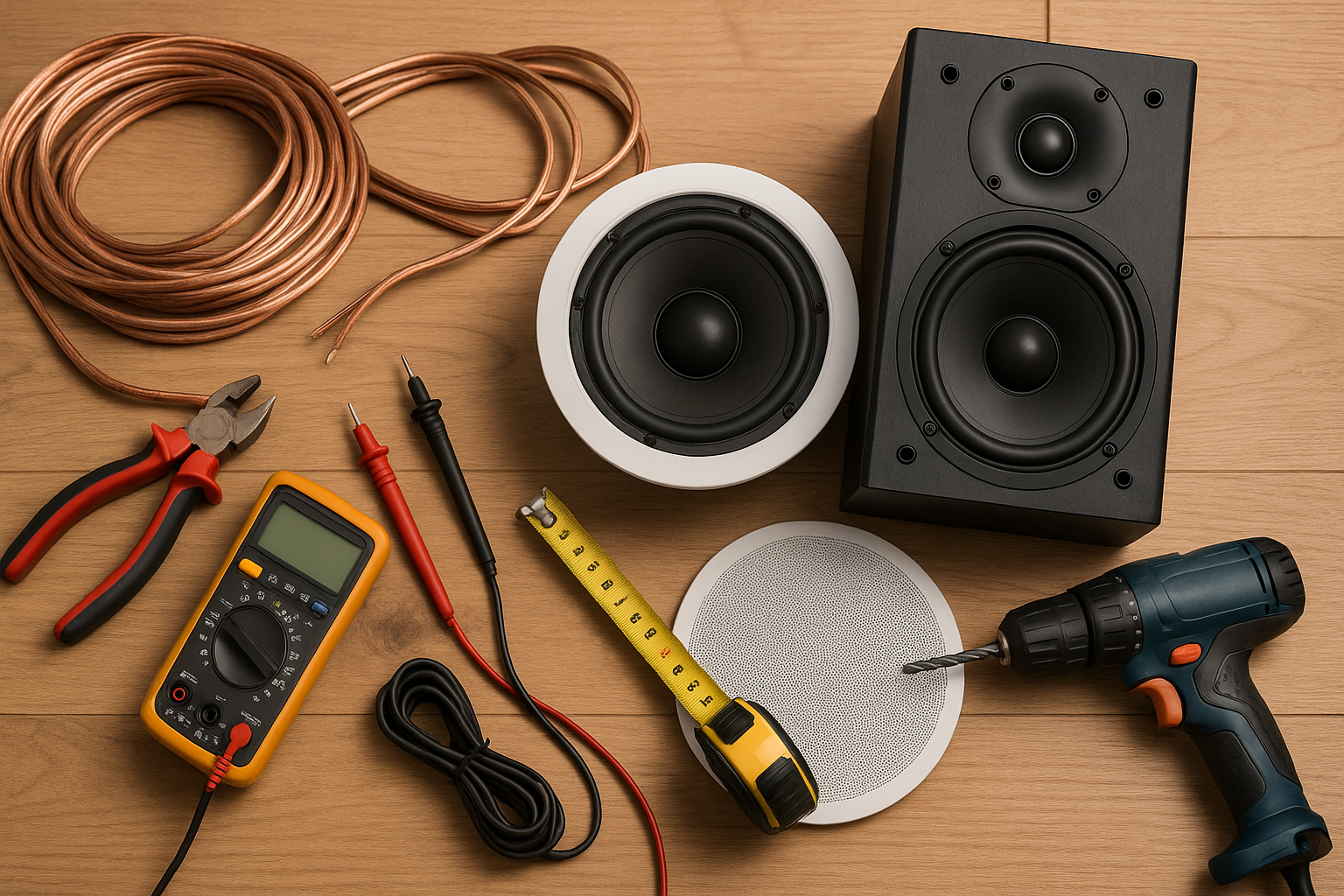
- Plan your runs: Home‑run speaker wire to a central spot in a closet or media cabinet.
- Use the right wire: 14/2 for most runs, 12/2 for long distances; CL2/CL3 rated for in‑wall.
- Label everything: At both ends—kitchen left, patio right, etc. It’s not busywork; it’s sanity.
- Finish clean: Use banana plugs, keystone wall plates, and short patch cables (Blue Jeans Cable, Monoprice).
Retrofit trick: fish wires along baseboards, into attics, or behind crown molding. When drilling top plates, seal holes with fire‑rated caulk. If you hit a stubborn fire block, don’t force it—reroute a few inches over. You’ll thank yourself later.
No‑holes option: a Sonos Amp or Bluesound Powernode placed near each zone speaker pair gives you clean multi-room audio over Wi‑Fi or Ethernet, with almost no drywall work.
Speaker Placement That Sounds Right
Here’s the thing: placement beats price. A properly placed modest speaker can sound better than a fancy one in the wrong spot.
- Stereo pairs: Form a triangle with your seat. Tweeters near ear height. Start with a slight toe‑in.
- In‑ceiling speakers: Space evenly; don’t crowd lights or vents. For kitchens, center over the main prep and seating areas.
- Subwoofers: Try the “sub crawl”—put the sub in your seat, play bass, walk the room, and find where it sounds smooth. Park the sub there.
- Atmos heights: For 5.1.2, place height channels slightly forward of the main seats. Avoid placing them way off to the sides.
Reflections matter. If voices sound splashy, hang a fabric art panel or a well‑stuffed bookshelf at the first reflection points. It looks stylish and hushes the room without turning it into a studio.
Calibration: The Secret Sauce
Even pros lean on tools. You should, too. It’s not hard, and it works wonders.
- Set distances and levels: Use your receiver’s built‑in mic (Audyssey, YPAO, Dirac Live) or an SPL meter app. Match channels to around 75 dB.
- Crossovers: Start at 80 Hz for most speakers; go higher for small in‑ceiling speakers. Let the sub handle the heavy lifting.
- Phase check: If bass feels thin, reverse the sub’s phase and re‑listen.
- Room EQ: Run the auto‑cal routine from a few seats, not just dead center. Save a preset for “Movie Night” and another for “Music.”
Want to nerd out a bit? Free software like REW with a basic USB mic lets you see peaks and dips. But don’t overthink it—trust your ears. If it makes you smile, you did it right.
Smart Control That Feels Effortless
A Salt Lake City home audio system should be simple enough for guests to use without a tutorial. Keep control consistent across rooms.
- Apps: Sonos, Bluesound, or HEOS keep music sources neat: Spotify, Apple Music, TIDAL, or local files.
- Voice: “Hey Google, play Miles Davis in the kitchen” works—just set clear room names.
- Scenes: Morning News, Dinner, Game Night. Pre‑set volumes and sources so one tap gets the vibe right.
Pro tip: wire your streaming hubs to Ethernet where you can. Wi‑Fi is great, but cables are steadier—especially during a full‑house party or a stormy Ute game when everyone’s on the network.
Common Mistakes We See (And Quick Fixes)
- Using lamp cord for speakers. Fix: CL‑rated 14/2 or 12/2. It’s safer and sounds cleaner on longer runs.
- Tweeters too high. Fix: ear‑level when seated; if in‑ceiling, use angled models aimed at the seats.
- Sub jammed in a corner and boomy. Fix: move a foot or two off the corner or try the sub crawl.
- Wi‑Fi only for everything. Fix: hard‑wire the main hubs; leave phones and tablets on Wi‑Fi.
- ARC/eARC headaches. Fix: use certified HDMI cables, enable CEC, then power‑cycle TV and receiver.
- Unlabeled wires. Fix: label both ends now. Future you will be thrilled.
Small changes can make a big difference. Seriously—move a speaker two inches, re‑run auto‑cal, and the system might suddenly click.
When DIY Meets Reality
There’s pride in doing it yourself. Still, some jobs go smoother with a steady hand. High ceilings, hidden beams, stone fireplaces, or a whole‑home prewire during a remodel can chew up weekends and appetite. That’s where a local team helps.
AZP Home Theaters & Automation designs, wires, and tunes systems across the Wasatch Front—from downtown condos to mountain homes in Draper. We speak construction and we speak music. Need a clean in‑ceiling layout for a chef’s kitchen? Or a family‑friendly 5.1.2 that doesn’t swallow the room? We’ll make it look purposeful and sound big without being loud.
We also know the local curveballs: winter inversions that change how rooms “hold” bass, basements that love standing waves, and stucco exteriors that play rough with outdoor Wi‑Fi. The fix is rarely more gear—it’s smarter placement, better wiring, and the right calibration.
Ready To Hear The Difference?
If you’re set to bring rich, room‑filling sound to your home—without the mess—give AZP Home Theaters & Automation a shout. We’ll sketch a plan, suggest gear that fits your space and budget, and set it up so anyone in the house can use it confidently.
Call us at 385-475-3549 or tap Request a Free Quote to start. Whether you want whole‑home home audio installation, a tidy home theater, or a single great room that sounds amazing during dinner, we’re here to help your place feel like your favorite venue—right here in Salt Lake City.