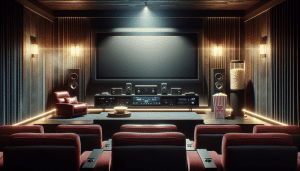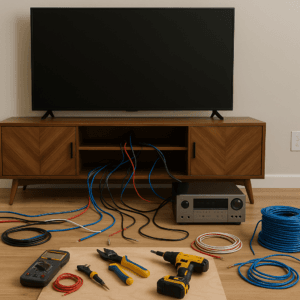
Great speakers and a beefy sub are fun, but here’s the thing most homeowners in Salt Lake City discover after a few movie nights: the room itself decides how your home theater actually sounds. If voices feel thin, explosions boom in one corner, or the whole space rings like the Tabernacle (cool for choir, not for Netflix), you don’t have a gear problem—you’ve got an Acoustic one. The good news? With smart, good-looking acoustic solutions, your theater can go from “pretty good” to “wow, that’s real” without wrecking your living room vibe.
Why your room is the biggest speaker you own
Sound doesn’t stop at the speaker. It bounces off walls, glass, and ceilings; it pools in corners; it lingers. Those reflections smear dialogue and make a violin feel sharp instead of sweet. In a basement theater off 900 East, low ceilings often mean quick reflections and a boomy hump around 60–80 Hz. In a downtown condo with big windows, highs zing around like pinballs. Different rooms, same culprit.
Think of your space like a camera lens. If the lens is smudged, even a 4K Projector won’t look right. Acoustics “wipe the lens.” A few measured changes—some acoustic panels, a couple of bass traps, a ceiling cloud—can shorten the echo, even out the bass, and let your system breathe. Suddenly you’re hearing detail you already paid for.
Start with the simple wins (they matter more than you think)
You don’t have to rebuild your house to get better sound. Start small, then scale.
- Speaker and seat placement. A foot forward or back can clean up bass peaks. Keep the center speaker close to ear height, angled to your main seat.
- Soften big hard surfaces. A rug with a plush pad tames splashy highs. Curtains (even stylish linen) soften glass reflections.
- Quiet the rattles. Add felt or rubber feet under décor. Put isolation pads beneath the sub. Little buzzes are louder than you think.
- Bookshelves as “free” diffusers. Staggered books and objects break up reflections on a back wall. It’s casual diffusion, but it works.
You know what? These small moves often reveal the next steps. When dialogue tightens up, you can hear where the room still misbehaves.
Absorption, diffusion, and bass control: the core trio
Acoustics revolve around three tools: absorption, diffusion, and bass control. They each have a job, and when they team up, your system sings.
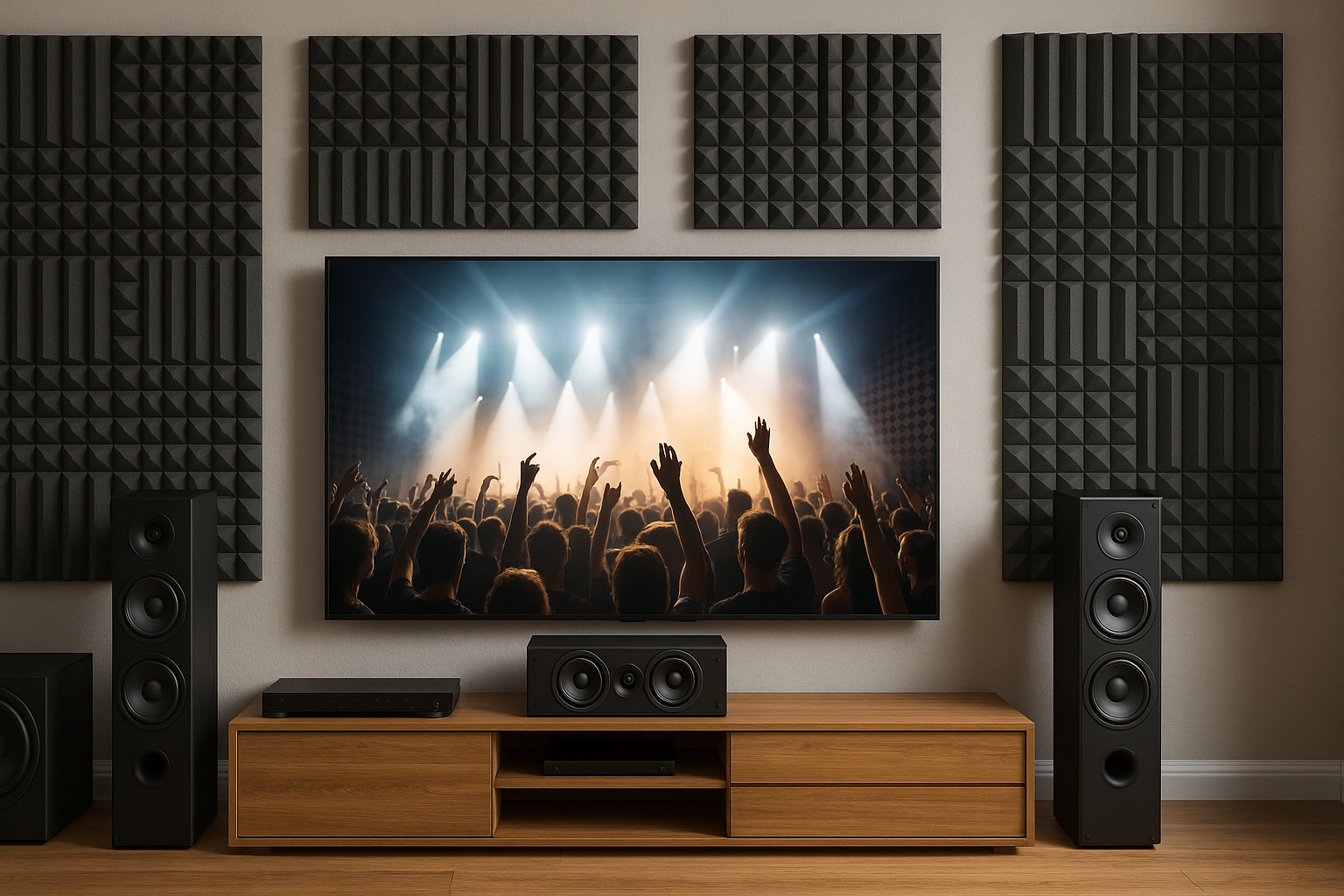
Absorption is like a sponge for mid and high frequencies. Fabric-wrapped acoustic panels from brands like GIK Acoustics, Vicoustic, or Artnovion at the first reflection points stop echoes before they start. Ceiling “clouds” above the seats help too—especially in basements with low ceilings.
Diffusion scatters sound so it feels spacious without going dead. Wood skyline or slat diffusers on the back wall make the room sound bigger. It’s the difference between a whisper in an empty gym and one in a cozy library.
Bass control tackles the hard part: low frequencies. Corners act like subwoofers whether you want them to or not. Add corner bass traps where two walls meet (or better yet, where walls and the ceiling meet). Bass becomes tighter, less “one-note,” more musical.
Finding your first reflection points (the mirror trick)
- Sit in your main seat. Have a helper slide a small mirror along the side wall.
- When you see the front speaker in the mirror, that’s a reflection point. Mark it.
- Do the same on the ceiling and the other wall. That’s where your first panels go.
It’s simple and oddly satisfying. Place panels there, and you’ll notice dialogue clarity and imaging lock in.
Quiet in, magic out: soundproofing basics that actually work
There’s a difference between sound treatment (what we’ve covered) and soundproofing (keeping sound from leaving or entering the room). If you’re trying to keep movie night from waking a sleeping baby—or neighbors in a townhouse—build choices matter.
- Mass and separation. Double 5/8-inch drywall with Green Glue damping between layers is a workhorse. Decoupled walls or resilient channel help too.
- Seal the leaks. Solid-core doors, door sweeps, and gaskets plug the “air paths” where sound loves to travel.
- Hush the HVAC. Lined ductwork and slow, larger vents reduce whoosh. Projector hush boxes can help if fan noise bugs you.
Planning a new build in Daybreak or a remodel in Sugar House? It’s easier when we design it early—though we can still improve an existing room, no question.
| Room Type | What Helps Most | Effort Level |
|---|---|---|
| Basement Theater | Ceiling cloud, corner traps, door seals | Medium |
| Open Family Room | Rug + pad, side panels, curtains | Low |
| Townhouse/Condo | Double drywall + Green Glue, solid door | High |
Calibration meets acoustics: the team-up you want
Once the room behaves, your gear can really shine. Room-correction software like Dirac Live (found in NAD and Arcam), Audyssey MultEQ XT32 (Denon/Marantz), or Anthem ARC refines the frequency response and timing. It’s not magic on its own, but paired with treatments, it’s powerful.
Subwoofers are a big one. Two smaller subs can give smoother bass across multiple seats than one big bruiser. We measure with a calibrated mic (UMIK-1) and REW software, then blend subs so the whole couch gets the same tight, even lows. If you’ve ever thought, “Why does the bass sound better in the hallway?”—this fixes that.
And yes, ears matter. Measurements guide us; listening confirms the feel. You’ll know when it’s right because you’ll forget you’re listening to speakers.
Style still matters: treatments that look as good as they sound
Maybe you’re thinking, “Panels? In my living room?” Honestly, modern designs look great. We use fabric-wrapped art panels with your photos, wood slat diffusers that echo the Wasatch pines, and low-profile ceiling clouds that read like modern Lighting features. Clean, warm, and intentional.
- Custom prints. Turn family photos or Utah landscapes into high-performance panels.
- Wood accents. Walnut or oak slat walls bring texture and gentle diffusion.
- Color matches. We match paints and fabrics so the treatment quietly blends in.
It’s not either style or sound. It’s both—done right.
Three common Salt Lake City scenarios (and what actually helps)
1) The classic basement theater. Low ceilings and concrete make bass pile up. We add corner bass traps, a ceiling cloud over the seats, and wall panels at reflections. Result: tight bass and crisp dialogue, even during the opening scene of anything Nolan.
2) The open living room with high ceilings. It looks gorgeous but can sound bright. We use an area rug with a cushy pad, a few art panels along side walls, and long curtains over glass. Add a sub placed by measurement—not by chance—and you get warmth without losing that open feel.
3) The downtown condo near TRAX. Noise in, noise out. Here the fix leans construction: denser walls, seal the door, maybe upgrade a couple of windows. Inside the room, slim panels and a compact sub keep things neighbor-friendly yet satisfying.
FAQ quick hits
Will panels make the room sound dead? Not if they’re placed smartly. We absorb early reflections and tame bass, then keep or add diffusion so the room stays lively.
How many panels do I need? For a small media room, 6 to 10 is common. Larger theaters may use 12 to 20 plus corner traps. We measure and confirm before anything goes on a wall.
DIY or professional? DIY can help, absolutely. But measured placement, proper thickness, and sub integration take it from “better” to “nailed it.”
How long does it take? A basic treatment plan installs in a day. Bigger soundproofing projects can run a week or two, depending on construction.
Budget? Most homeowners see a big leap in sound with a sensible, staged plan. We’ll prioritize the pieces that move the needle first.
Why AZP Home Theaters & Automation for acoustics in SLC
We’re local, and we’ve heard it all—from the tight little Sugar House basement to the soaring Daybreak great room. AZP Home Theaters & Automation brings measurement-first design, seasoned installation, and tidy finishing touches. We work with proven brands for home theater acoustic treatment and soundproofing, and we’ll make it look like it belongs.
- Measure, then design. UMIK-1 and REW to map issues; targeted fixes so you don’t buy what you don’t need.
- Clean, fast installs. Minimal disruption; tidy cable management; careful wall mounting.
- System calibration. Dirac, Audyssey, or ARC—dialed to your room and preferences.
Here’s the part homeowners love: your existing gear usually sounds new once the room is right. Sometimes we upgrade nothing and it still feels like a big step up.
Ready to hear the difference?
If you’re in the Salt Lake City area and want a theater that actually sounds like a theater, let’s talk. We’ll listen to your space, your style, and your goals—then build a plan that fits. Call AZP Home Theaters & Automation at 385-475-3549 or Request a Free Quote. One conversation, a few smart acoustic moves, and your system will finally show what it can do.