You want movie nights that feel special, game days that sound huge, and controls so simple your guests don’t even ask how to use them. That’s the heart of a beginner-friendly smart home theater. If you live around Salt Lake City—snowy Saturdays, bright summer evenings, neighbors close by—you’ll want gear and setup choices that fit real life here. Let me explain how to build it, step by step, with zero tech headaches and a little room for fun.
Step 1: Picture the experience, not the gear (yet)
Before you start shopping, imagine the room. Cozy Sugar House basement? Bright family room in Daybreak? A long bonus room out by the foothills? Size, light, and seating shape everything. Jot down three goals. Maybe: big Screen for Jazz games, quiet volume late at night, and one-Remote Control. That list keeps you sane when the specs start shouting.
You know what? It helps to walk the space with a tape measure and painter’s tape. Mark where the screen might go. Sit where the couch will be. Check outlets. Note windows and the sun’s path—Utah light is strong and sneaks in from everywhere. This little planning session saves money and arguments.
We’ll match the gear to the plan, not the other way around. Trust me, that’s the beginner’s secret.
Step 2: Screen choice—TV or Projector without second-guessing
Here’s the thing: both can be great. A large 4K TV is bright, simple, and sharp. Projectors feel cinematic and huge. Ask two questions. How bright is the room? And how big do you want the picture?
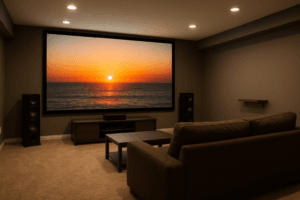
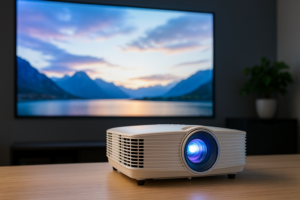
For bright rooms, consider a 77–83 inch LG OLED or Sony OLED. Blacks look inky, and sports pop. For basements or controlled light, a 4K projector brings 100–120 inches with ease. An Epson 5050UB or newer LS series laser model is a crowd favorite. If the room has windows, an ALR (ambient light rejecting) screen helps a ton. Ultra short throw projectors from Hisense also work in family rooms with the right screen.
Mount height matters. Keep the center of the image near eye level from your main seat. Don’t crane your neck; this is movie night, not a gym session.
Step 3: Sound that gives you goosebumps, not headaches
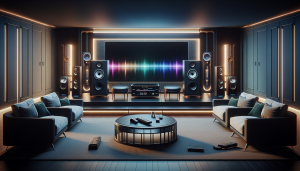
Great audio is where a theater comes alive. Start with a simple layout like 5.1 or 5.1.2 Dolby Atmos (that “.2” is two height channels). A quality AV receiver from Denon or Yamaha plus a compact 5-speaker set from Klipsch, Polk, or Definitive Technology covers beginners nicely. Add a good subwoofer—SVS or Hsu are beloved here along the Wasatch Front.
Center speaker first. It handles dialogue. Place it close to ear height, angle it up if needed, and don’t bury it in a cabinet. Subwoofer placement is like finding the sweet spot for fly fishing on the Provo—move it around, listen, then set it where bass feels even, not boomy.
You don’t need a fancy receiver. Then again, the right receiver saves time and cables. If you want easy voice control and simple switching, pick a model with eARC and room correction. We’ll tune it later.
Step 4: Smart control—make it feel obvious
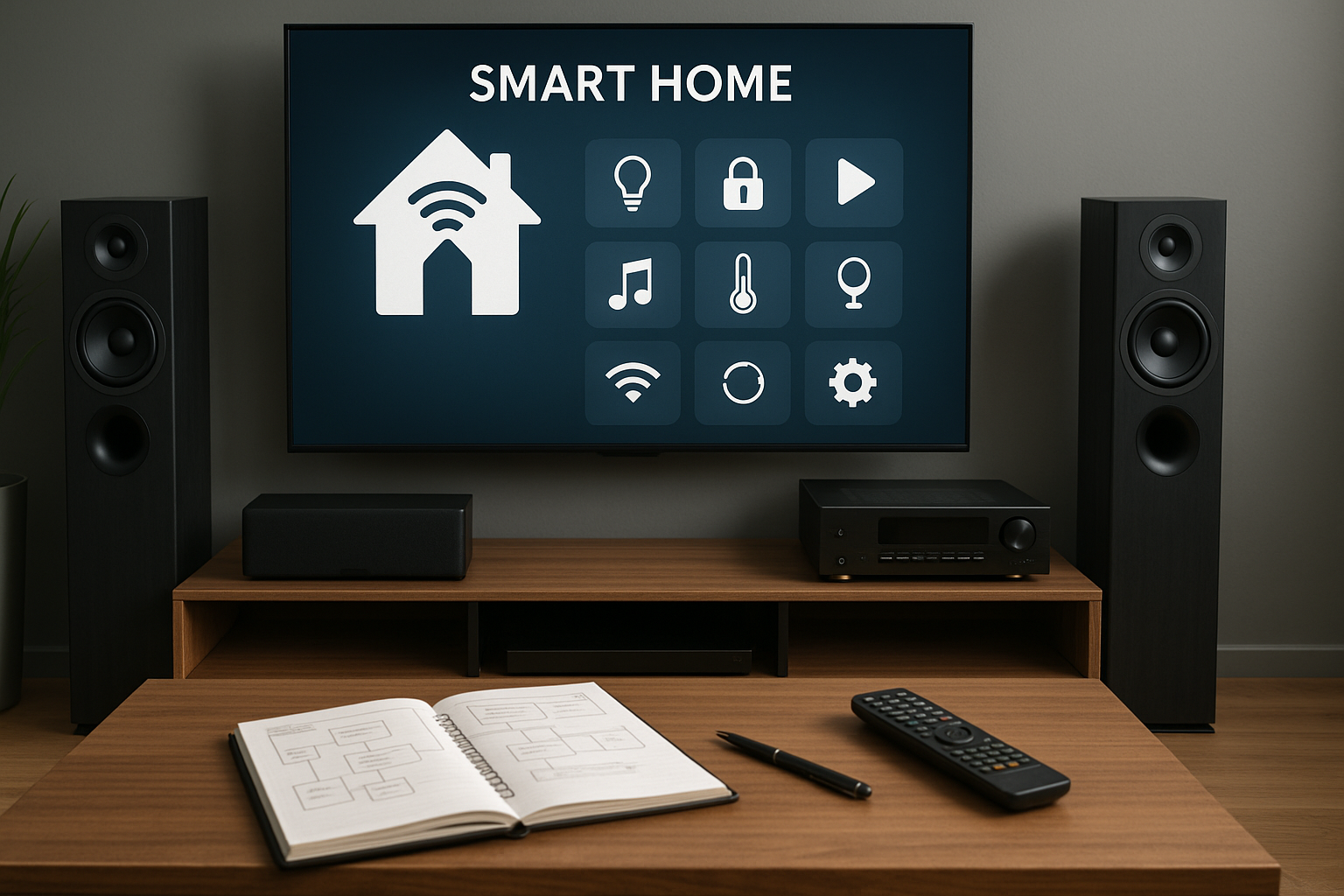
A true smart home theater should be simple to run. That’s the whole point. A single app, a single remote, or a single phrase. Consider platforms like Control4 (our clients love it), or lighter systems using Apple Home, Google Home, or Alexa. Pair it with a universal remote or a touchscreen keypad in the room. Scenes do the heavy lifting: lights dim, TV turns on, inputs switch, volume sets to a friendly level.
Real-world idea: “Movie Night.” One tap or “Hey Siri, Movie Night.” The smart Lighting drops to 20 percent, the Denon AVR flips to the right input, and the shades close. You don’t fiddle; you watch.
Step 5: Streaming and network—quietly critical
The best theater can’t shine on a weak network. In Salt Lake City, Google Fiber, Xfinity, and UTOPIA offer fast service. Still, Wi‑Fi is only half the story. For steady streaming, hardwire where you can. Run Ethernet to your Apple TV 4K, NVIDIA Shield, or Roku Ultra. If wiring is hard, upgrade to Wi‑Fi 6 with quality gear like eero or Ubiquiti UniFi. Place access points wisely—thick basement walls can play tricks.
Keep sources simple. One or two streaming boxes are enough for most families. You don’t need every logo in your rack. And label your cables; future-you will send you a thank-you text.
Starter picks that just work
| Good | Better | Best (Beginner-Friendly) |
|---|---|---|
| 65–75 in 4K TV | 77 in OLED | 100–120 in 4K projector + ALR screen |
| 5.1 soundbar with sub | 5.1 AVR + compact speakers | 5.1.2 AVR + in-ceiling Atmos |
| Roku or Apple TV | Apple TV + Ethernet | Apple TV + Ethernet + Control4 scene |
Step 6: Light, shades, and the quiet art of comfort
Lighting makes or breaks the room. Add dimmers for zones. A soft strip behind the TV as bias light reduces eye strain. Smart dimmers like Lutron Caséta pair easily with scenes; Philips Hue adds color accents if you want a little flair for Jazz wins or holiday nights.
For bright afternoons, consider blackout shades or layered curtains. Snow glare is real along the Wasatch. Motorized shades that tie into your scene feel like magic, but they’re also practical—reduce reflections, boost contrast, and help your HVAC a bit.
Step 7: Power and ventilation—the unglamorous stuff that saves gear
Surge protection is non-negotiable at altitude with our dramatic weather swings. Use a quality unit from Panamax or SurgeX. If you tuck gear in a cabinet, give it breathing room. Receivers get warm. Add a quiet fan if the space runs hot, especially in tight basements. Cable management helps airflow and sanity—Velcro ties are cheap and heroic.
Step 8: Calibrate once; enjoy for years
Room correction turns a good setup into a grin-inducing one. Run your AVR’s system—Audyssey (Denon), YPAO (Yamaha), or Dirac Live on supported models. Follow the mic steps. Don’t rush. Then tweak center channel dialogue up a tick if you like it extra clear. It’s your room.
For video, choose the “Cinema” or “Filmmaker” mode, set color temperature to warm, and disable motion smoothing if soap-opera vibes bug you. Projector users: match the screen size and throw, then adjust focus at actual viewing distance, not from two feet away.
Acoustic touches? A thick rug, curtains, even a bookcase on a side wall can calm echoes. You don’t have to hang studio foam to get a sweet sound. Honestly, plants help a bit too—bonus points for style.
Step 9: Build your first three scenes
Start small and tie scenes to daily life. Here are three that feel natural in Salt Lake City homes.
- Movie Night: Lights to 20 percent, shades down, AVR on the streaming input, volume at -35, sub wakes up. One button on a keypad or a short voice command.
- Sunday Jazz Game: TV to sports mode, center channel bumped +1 dB, bias light at 40 percent in team colors if you’re feeling it.
- Kids’ Bedtime Calm: TV timer to off in 30 minutes, lights ramp from 30 to 0, white noise scene on a smart speaker in the hallway.
Bonus tip: if the doorbell rings mid-movie, your system can pause playback and raise the lights to 40 percent for 60 seconds. Little touches matter.
Budget and timeline—so you know what you’re signing up for
Pricing varies, sure, but ballparks help. A clean beginner build in Salt Lake City looks like this:
- Starter TV setup: 65–75 inch TV, 5.1 soundbar, streaming box, smart dimmer. Rough range: $1,200–$2,500. Same-week DIY or a one-day pro visit.
- Core theater: 77 inch OLED or 100–120 inch projector, 5.1.2 AVR-based audio, shades, simple control. Rough range: $4,500–$9,000. Two to five days including mounting and clean wiring.
- Polished smart theater: Custom screen, in-ceiling Atmos, motorized shades, Control4 scenes, acoustic treatment, rack. Rough range: $9,000–$20,000+. One to two weeks depending on trim work.
DIY is great if you enjoy tinkering. Still, fishing HDMI through insulated walls or balancing subs can test anyone’s patience. No shame in calling for backup.
When you should call a pro—and how we help
There are moments where experience saves the day. Old brick in Sugar House? Townhome walls that carry bass into a neighbor’s study? A projector throw that clashes with your ceiling fan? We’ve seen it all. AZP Home Theaters & Automation brings clean installs, tidy wiring, and friendly training so your family actually uses the system every night.
Our team designs around your space and your habits. We program scenes that behave, integrate shades and lights that never fight, and pick gear that lasts through Utah winters and dusty summers. Most of all, we keep the setup simple—because a beautiful theater that’s hard to run isn’t a theater. It’s furniture.
Ready to press play? Let’s make it easy
If you’re a homeowner in or around Salt Lake City and want a beginner-friendly, great-sounding, genuinely smart home theater, we’re here to help. Call AZP Home Theaters & Automation at 385-475-3549 and tell us what you have in mind. Or tap the button on our site to Request a Free Quote. We’ll listen, sketch a plan, and handle the details so you can sit back, hit Movie Night, and smile at the first notes of that opening scene.