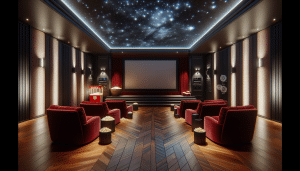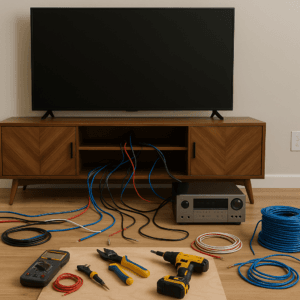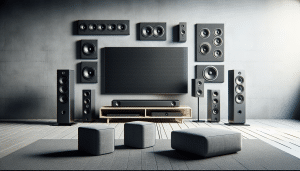
Close your eyes and picture movie night—the lights dim, the Wasatch evening settles in, and the first note of the score swells. If the speakers are placed right, the room disappears and the story takes over. If they aren’t, things feel flat, like a big picture on a small Screen. That’s why home theater speaker placement is such a big deal for Salt Lake City homeowners. The good news? With a few practical steps and a bit of patience, you can get that “wow” sound without rebuilding your whole room.
Why placement matters more than price (yep, really)
It sounds backwards, but speaker position often has more impact than the speaker’s price tag. The room shapes the sound, then the speakers do their job. Put great speakers in the wrong spot, and dialogue gets muddy, bass booms, and effects smear. Place modest speakers well, and they sing. We’re not saying gear doesn’t matter—it does. But placement is the force multiplier.
Here’s the thing: your ears care about distance, angle, and height. Your eyes may want everything tucked into a cabinet, but your ears want space. That little tug-of-war is normal in any home theater. We help people in and around Salt Lake City solve it every week.
The simple geometry that sets the stage
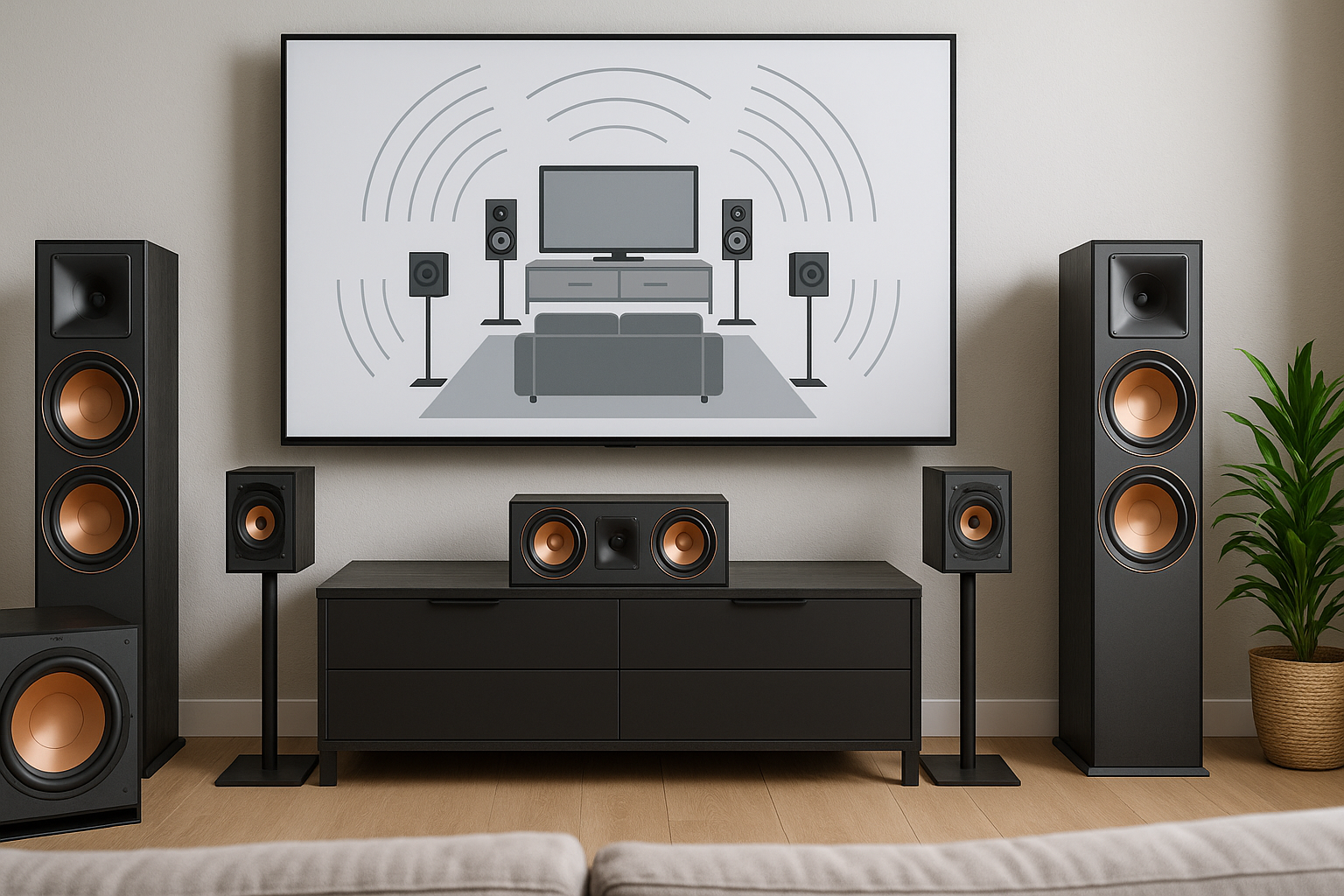
Think of your front left and right speakers and your main seat forming a triangle. That triangle is the starting line for better sound. Seat in the center; speakers out to the sides; tweeters near ear height when you’re seated. To tighten the center image, “toe-in” the speakers slightly so they point just behind your head. Not at your nose—just behind. Small changes here can make dialogue snap into focus.
Place the center channel directly under or above the TV, aimed at your ears. Don’t bury it in a closed cabinet. If it must sit in a media console, pull it to the edge and tilt it up with a simple wedge or isolation stand. Little trick, big payoff.
Salt Lake City rooms have their quirks—use them
Homes along the Wasatch Front love open concept spaces, big windows, and yes—hard floors. Beautiful? Absolutely. Reflective? Also yes. Hard surfaces bounce high frequencies. A thick rug, a lined curtain, or a fabric sofa creates an immediate improvement, especially if your theater is part of a great room in Daybreak or Sugar House.
Basements are big here too. They’re great for light control and quiet, though low ceilings can fight with Dolby Atmos height effects. That’s fine—ceiling speakers still shine, and if you’ve got a drop ceiling, you’re halfway there on cable routing. Dry air in winter can also make some rooms sound a bit “zingy.” Soft furnishings help—so do a few well-placed Acoustic treatment panels if you want to get serious.
The sweet spot, decoded: angles and heights that work
If you like numbers, these ones are friendly. Use a tape measure, a painter’s tape X on the floor for your main seat, and a simple angle app on your phone.
| Setup | Front L/R | Surrounds / Heights |
|---|---|---|
| 3.1 or 5.1 | 22–30° from center; tweeters at ear height | Surrounds 90–110° to the sides; 1–2 ft above ear |
| 7.1 | Same as above | Sides 90–100°; Rears 135–150°; both 1–2 ft above ear |
| Atmos 5.1.2 or 5.1.4 | Same as above | Heights at 30–55° elevation; aim for even left/right coverage |
Don’t chase perfection on day one. Get close, listen, then nudge an inch or two. Your ears will tell you when you’ve hit the pocket.
Bass without the boom: subwoofer placement that behaves
Deep bass doesn’t play fair. It loves corners and hates symmetry. The trick is finding a spot where low frequencies don’t stack and wobble. Start with the “sub crawl.” Place the sub at your main seat. Play a bass-heavy track or a test tone. Crawl around the room’s perimeter and listen for smooth, even bass. That spot that sounds best? Put the sub there. It works surprisingly well.
For many rooms, front wall near a corner is best, but not jammed in. A few inches of breathing room can reduce boom. If your room is wide or open to a kitchen, two subs—placed at midpoints of opposite walls or front and back—can even things out. Dual subs aren’t about louder. They’re about smoother.
Set crossovers around 80 Hz for most bookshelf and tower speakers, and let the AVR handle bass management. If you want to go nerdy, tools like REW (Room EQ Wizard), a UMIK-1 mic, and a miniDSP box can shape bass like a sculptor. Short of that, auto-EQ systems—Audyssey, Dirac Live, YPAO—do a strong job. Subwoofer placement plus smart EQ equals bass that hits and then stops. That “stops” part is the magic.
Mounts, stands, and that center channel everyone underestimates
Floorstanding speakers like a bit of space from the wall. Eight to twenty inches is a good window. Bookshelf speakers need solid stands that place tweeters at ear height and kill wobbles—look for stands you can fill with sand or shot. Isolation pads on stands or media consoles help keep your bass from rattling furniture.
For in-walls, aim for symmetry and use backer boxes where possible. We love in-walls behind an acoustically transparent screen—they look clean and lock in the sound to the image. For most living rooms, a dedicated center speaker is non-negotiable. It carries the dialogue. Place it close to the screen, angled to your face, and matched in tone to your left and right. A mismatched center makes voices sound like they’re coming from a different room.
Atmos that actually feels like height—not just “more speakers”
Dolby Atmos wants sound to move above you in a dome. In-ceiling speakers are the purest way to get there. Place pairs either slightly in front of and behind the main seat or just forward of the front L/R planes—about 30–55 degrees up from your ears. Don’t shove them directly overhead unless your seating is locked.
Can’t cut the ceiling? Upfiring Atmos modules can work if your ceiling is flat and reflective. If it’s vaulted or rough, go with on-ceiling mounts to aim sound precisely. In many Utah basements with drop ceilings, in-ceilings are easier than you’d think—tiles lift out for quick cable routing.
Calibrate like a pro: quick steps that pay off
Once speakers are in place, run your AVR’s auto-setup. Place the calibration mic at ear height on a stand or a stack of books. Do multiple positions around your main spot. When it’s done, check these simple tweaks:
- Speaker sizes and crossovers: Set all to Small and crossovers near 80 Hz unless your speakers are very large. Don’t be shy—Small sounds better.
- Levels: Dialogue still soft? Bump the center channel by 1–2 dB. Tiny changes make big differences.
- Distances: Trust the auto-measured delays unless they look wildly wrong. They account for processor latency.
- Dynamic features: Late-night viewing? Use Dynamic EQ or Dialogue Enhance modestly. Key word: modestly.
If your AVR supports Dirac Live or Audyssey MultEQ XT32, you’re in great hands. Honestly, a well-run calibration lifts a room even when placement isn’t perfect. But why not have both?
Common gotchas we see all the time
You know what? These little mistakes happen in amazing homes. They’re easy fixes:
- Speakers jammed into cabinets: They need air. Pull them forward so the front baffle is flush with the shelf edge.
- Sofa on the back wall: Move it forward by 8–12 inches. It softens bass peaks and opens the surround field.
- Asymmetry: If a speaker fires into a hallway on one side and a wall on the other, slide seating a few inches toward center or add a curtain or bookshelf to balance reflections.
- Center channel too low: Tilt it up. A ten-dollar wedge can fix a thousand-dollar problem.
Quick home-friendly upgrades that blend with your style
Great sound doesn’t have to shout. A plush rug between you and the front speakers, lined drapes on the big window, and a couple of fabric chairs tame reflections. A bookcase with uneven spines works like casual diffusion. If you want purpose-built panels, Auralex and GIK make options that look like art. In winter, heavier curtains in your theater space do double duty—cozy feel, calmer highs. During summer movie marathons or Jazz games, a soft throw and a sectional help just as much.
Bonus move: put felt dots under décor on media furniture. Less buzz, more music.
What if my room isn’t “ideal”?
Most rooms aren’t. They’re family rooms, playrooms, basements with a treadmill tucked in the corner. That’s normal. The goal isn’t a lab. It’s goosebumps. Start with the triangle, find a happy home for the sub, treat a few reflections, then calibrate. You’ll be surprised how fast “pretty good” turns into “whoa.” And if you’re aiming for reference-level or a hidden, built-in look, we can handle the heavy lifting—design, wiring, and tuning that respects how you live.
Need a hand? AZP is local, friendly, and a little obsessed
We’ve set up systems across Salt Lake City, from compact townhomes to full-blown basement cinemas. We bring laser measures, angle finders, and the ears that come from doing this every day. More importantly, we listen—to you, your space, and your goals. Whether you want invisible in-walls, a stealthy living room upgrade, or a reference Atmos room that makes the opening credits feel like a ride, AZP Home Theaters & Automation is here to help.
Ready to hear what your speakers can really do? Call us at 385-475-3549 or reach out to Request a Free Quote. We’ll tune your system for your room, your taste, and your next great movie night.